
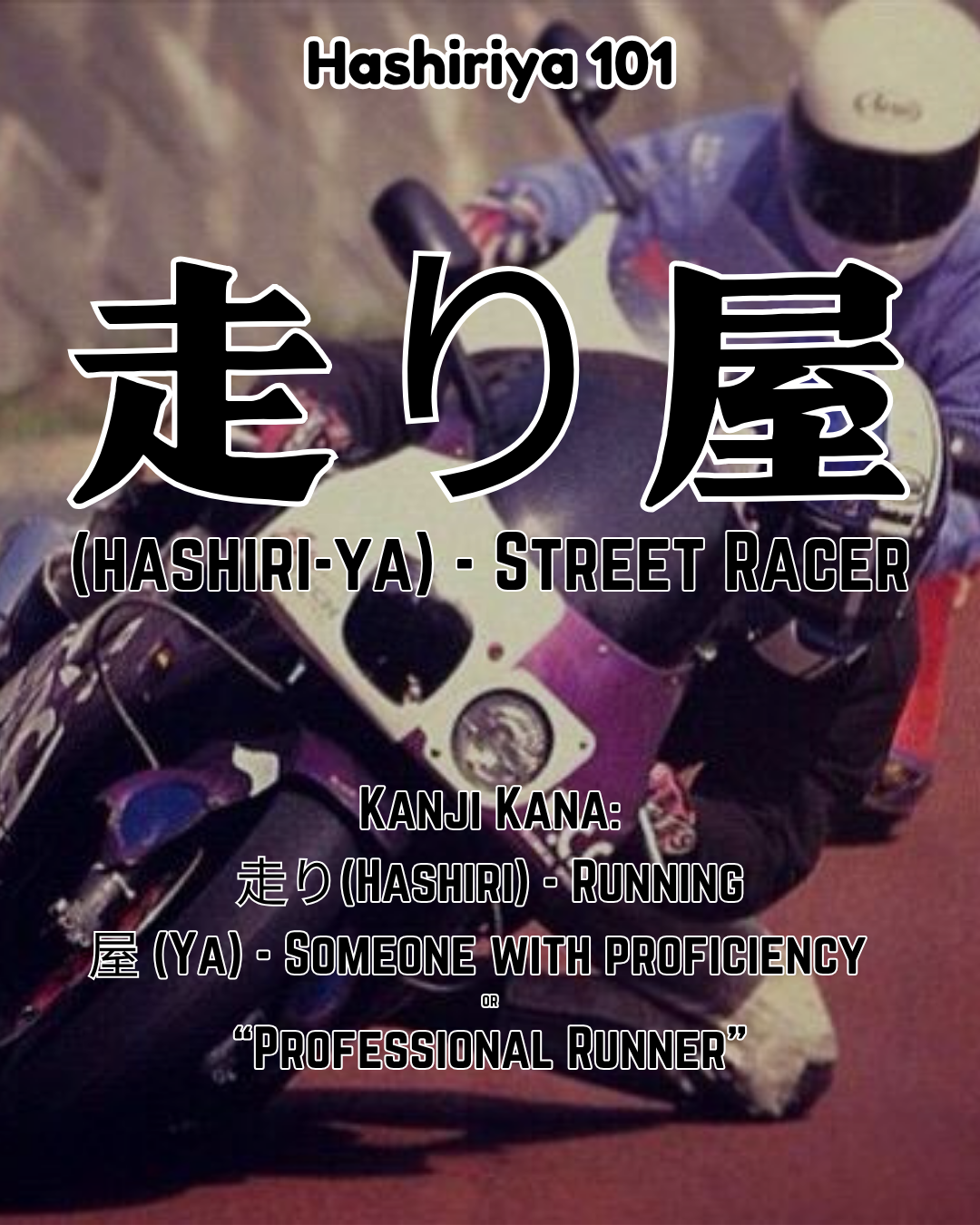
Hashiriya 101
The term Hashiriya (走り屋) is the definitive title for a street racer. Originally, it was a broad term used to describe anyone who pushed the limits of their motorized machine on public roads. The term Hashiriya applies to the person rather than the vehicle they operate. It represents their driving spirit, their bravery, and their technical skill.
In the early days, motorcycle enthusiasts were specifically distinguished as Nirin-Hashiriya (or two-wheeled racers). However, as Japan entered its economic boom in the 1980s and 1990s, youth culture and disposable income collided, creating the peak era of motorcycle street racing.
Young riders flooded winding mountain passes (Touge), urban highway loops and vacant sea ports on lightweight, high-revving race replica sportbikes. The subculture exploded in popularity to the point where the "Nirin" prefix was dropped entirely; the term Hashiriya became historically synonymous with this hardcore breed of bikers.
A Culture of Skill and Style
This era cemented the Hashiriya as underground icons in Japan. They weren't just thrill-seekers; they were defined by a relentless pursuit of riding perfection. These riders became famous for:
Technical Rider Skill: Mastering knee-down cornering techniques on incredibly dangerous and narrow winding public roads.
Their Unmistakable Style: Brightly colored racing leather and motorcycle livery, customized helmets, and stripped down, highly aggressive—highly modified motorcycles.
Unified Teams: Forming distinct racing teams with their own logos, rivalries, and territories.
Explore the style, culture, and origin of these riders in History of Hashiriya.